Modern manufacturing is evolving rapidly.
Across industries such as transportation, renewable energy, electronics, construction, and industrial fabrication, manufacturers are under increasing pressure to produce lighter, cleaner, and more efficient products without compromising strength or durability.
Traditional mechanical fixings such as screws, rivets, bolts, and welds still play an important role in assembly, but they can also create challenges. Added weight, visible fixings, material stress points, corrosion risks, and slower production processes are all common issues that manufacturers are looking to reduce.
As a result, more businesses are turning towards advanced adhesive bonding technologies that support both engineering performance and production efficiency. One product that continues to stand out in this area is 3M’s new VHB Max Tape.
At RGH Converting, we help manufacturers apply high-performance bonding materials through precision converting, technical guidance, and production-ready adhesive solutions. As a 3M Preferred Converter, we support businesses looking to solve demanding bonding challenges with practical, scalable solutions.
Standard 3M VHB™ Tapes vs. 3M VHB™ Max Tape
The introduction of 3M VHB™ Max Tape represents one of the most significant developments in acrylic foam bonding technology for many years. While traditional 3M VHB™ Tapes have become the industry standard for replacing rivets, screws, spot welds and liquid adhesives in thousands of applications, VHB Max Tape has been engineered to deliver even greater performance in demanding manufacturing environments.
Standard 3M VHB Tapes use a viscoelastic acrylic foam core with high-performance acrylic adhesives on both sides. This unique construction allows the tape to conform to surface irregularities, absorb vibration, compensate for differential thermal expansion and provide long-term durability in both indoor and outdoor environments.
3M VHB Max Tape builds on this technology by offering:
- Higher ultimate bond strength on many common engineering materials.
- Improved stress relaxation, helping maintain bond integrity under sustained loads.
- Faster build-up of handling strength, allowing components to be moved or processed sooner.
- Enhanced performance across a wider range of temperatures and environmental conditions.
- Greater design flexibility for manufacturers looking to replace mechanical fasteners or structural adhesives.
For designers, this means the potential for stronger, more reliable bonds with a simplified assembly processes and improved manufacturing efficiency.
Joining Materials Is Becoming More Important
Modern product design places increasing demands on manufacturers. Products are becoming lighter, more compact, and more aesthetically refined, while production teams are expected to improve efficiency and maintain high-quality standards.
Mechanical fastening methods can slow production and introduce unnecessary complexity. Drilling, welding, and riveting often require additional labour, tooling, alignment, and finishing processes that increase production time and costs. Fasteners can also create concentrated stress points that weaken assemblies over time, especially in applications exposed to movement or vibration.
3M bonding tapes such as 3M VHB Max help solve these challenges by distributing stress more evenly across bonded surfaces while supporting cleaner and more streamlined assembly methods.
Replacing Mechanical Fixings with Cleaner Bonding Solutions
One of the biggest reasons manufacturers choose 3M VHB Max is the ability to reduce or eliminate visible mechanical fixings from assemblies.
In many products, screws and rivets can negatively affect both aesthetics and performance. Very High Bond Tapes create smoother surfaces and cleaner finishes while helping reduce the need for drilling or welding. This is particularly beneficial in applications involving metal panels, transportation assemblies, architectural systems, electronic enclosures, and branded products where appearance matters alongside performance.
Using bonding tape instead of traditional fixings can also help protect delicate materials from damage during assembly and reduce the risk of corrosion caused by exposed fastening points. VHB Tapes can also bond dissimilar metals without introducing the risk of galvanic corrosion.
Supporting Lightweight Manufacturing
Reducing weight has become a major priority across industries such as EV manufacturing, transport, renewable energy, and electronics. Traditional fasteners may seem small individually, but across high-volume production, they can add significant weight and complexity to assemblies.
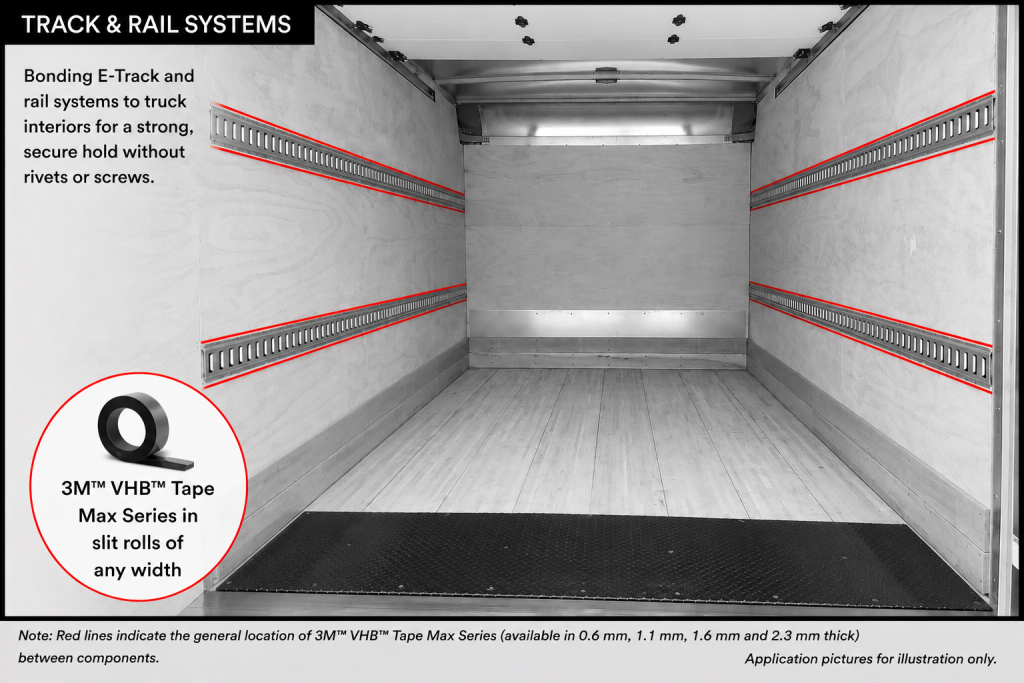
3M VHB Max supports lightweight product design by providing very strong bonds without the additional bulk associated with mechanical fixings. Its ability to create durable bonds while maintaining a relatively thin profile allows engineers to design more efficient assemblies without sacrificing reliability.
This is particularly important in electric vehicle and transportation manufacturing, where reducing weight can directly contribute to improved energy efficiency and system performance.
Designed for Demanding Industrial Environments
Bonding with tape is different; one of the greatest advantages of acrylic foam tapes is how they transfer loads.
Mechanical fasteners such as rivets, screws and spot welds transfer forces through relatively small, concentrated fixing points. These points become stress concentrations where loads are focused into a very small area of the substrate. Under repeated loading, vibration or thermal movement, these stress concentrations can initiate fatigue, distortion or cracking.
By contrast, 3M VHB Tape bonds across the entire bonded surface area. Instead of transferring loads through individual fixing points, forces are distributed evenly over the complete bond line.
This provides several important engineering advantages:
- Reduced peak stresses within the substrates.
- Improved fatigue resistance under cyclic loading.
- Better resistance to vibration and impact.
- Elimination of localised stress concentrations.
- Lower risk of substrate cracking or distortion.
- Improved durability when bonding dissimilar materials with different coefficients of thermal expansion.
The viscoelastic acrylic foam core also acts as an energy absorber, continuously dissipating stresses that would otherwise be transmitted directly into the joint.
Improving Production Efficiency
Manufacturers are constantly looking for ways to improve workflow efficiency and reduce unnecessary production stages.
Traditional fastening methods often involve multiple steps, including drilling, welding, grinding, alignment, and finishing. These processes increase labour requirements and slow down production.
Very high strength bonding tapes offers a more streamlined approach. When integrated correctly into the assembly process, 3M VHB Max can help manufacturers reduce handling time, simplify workflows, and improve assembly consistency.
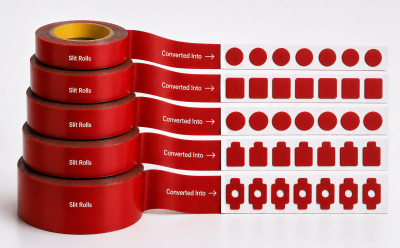
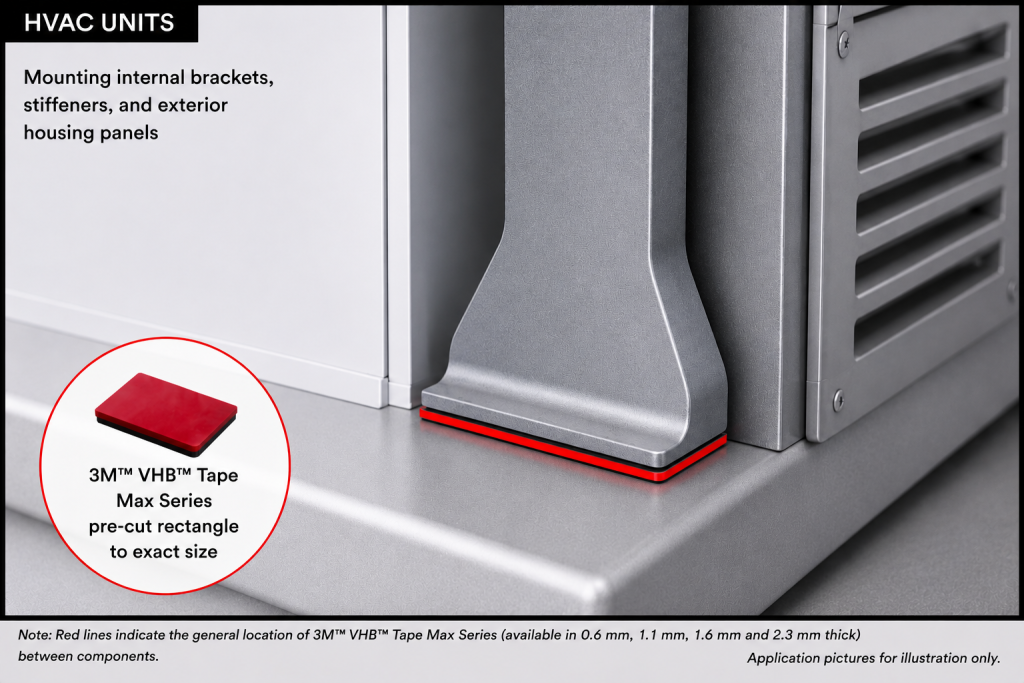
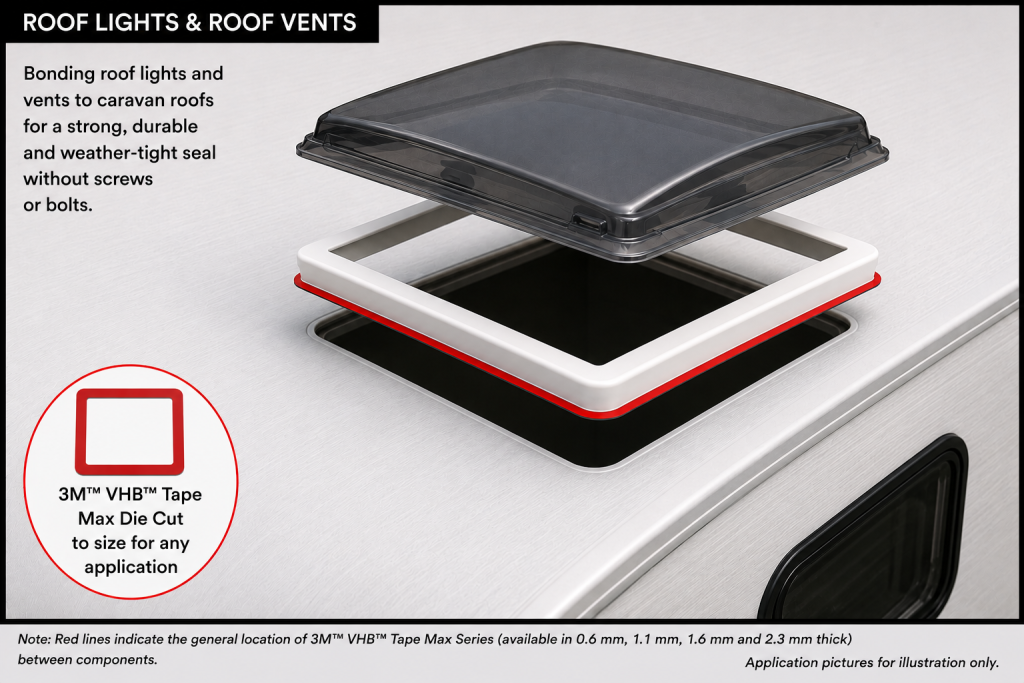
At RGH Converting, we precisely convert, 3M VHB Tapes into production-ready formats tailored to individual applications. This includes die-cut adhesive components, custom bonding shapes, slit rolls, and laminated constructions designed to improve placement accuracy and reduce material waste.
Rather than manually applying oversized tape sections on the production floor, manufacturers receive precisely engineered adhesive components designed specifically for their production process.
Greater Design Freedom for Engineers
Mechanical fixings often dictate how products must be assembled, limiting flexibility for designers and engineers.
Adhesive bonding allows greater freedom when designing modern products. Manufacturers can create cleaner surfaces, bond dissimilar materials, reduce visible hardware, and simplify overall assembly design.
This flexibility is particularly valuable in industries focused on both aesthetics and performance, including transportation, electronics, construction, and consumer products.
By removing the constraints associated with traditional fasteners, engineers can create more refined and efficient assemblies while maintaining structural reliability. Selecting the right bonding material is only part of the solution. Manufacturers also need a converting partner that understands production challenges and can deliver materials in formats ready for efficient assembly.
Selecting the Right Joining Method with RGH Converting
There is no single joining technology that is ideal for every application. Mechanical fasteners, structural adhesives and acrylic foam tapes each have their place in modern manufacturing.
Where the design objective is to reduce weight, improve aesthetics, simplify assembly and create durable joints capable of withstanding vibration and differential thermal expansion, 3M VHB Tapes—and particularly the latest 3M VHB Max Tape technology—offer significant advantages over traditional joining methods.
The result is not simply replacing a rivet with a tape but adopting a fundamentally different method of engineering a joint: one that spreads loads evenly, reduces stress concentrations and enhances long-term reliability.
Whether you are bonding metal panels, fabricating transport assemblies, developing renewable energy systems, or manufacturing industrial equipment, we can help identify the right bonding solution for your project. Combined with precision converting and technical support from RGH Converting, manufacturers can implement structural and semi-structural bonding solutions that improve efficiency, consistency, and long-term reliability.
At RGH Converting, we support manufacturers from material selection and prototyping through to full-scale production support. As a trusted 3M Preferred Converter, we combine access to industry-leading adhesive technologies with practical converting expertise and responsive engineering support.
If you are exploring alternatives to traditional mechanical fixings, looking to improve bond performance or reviewing your manufacturing process, contact our team to discuss your application.