
Nie sklasyfikowane
3M Automotive Tape Guide: Trim, Badges & Anti-Rattle

By Neil Sinclair, Product Development Engineer at RGH Converting.
Published 12 November 2026 · Last updated 12 November 2026
3M automotive tapes are double-sided acrylic foam and adhesive transfer tapes engineered to attach trim, badges, mouldings, sensor brackets and interior parts to a vehicle without clips, rivets or screws, sealing the joint and damping vibration at the same time. Paired with die-cut felts and foams that stop parts buzzing, squeaking and rattling, they do a large share of the quiet work that makes a vehicle feel well built.
This guide maps the common automotive bonding jobs to the 3M grades that suit them, explains why a tape often outperforms the fastener it replaces, and shows how the parts arrive at your line ready to apply. We convert these materials as a Preferowany przetwórca 3M, under IATF 16949:2016, the automotive quality standard.
Which 3M tape for which automotive job
| The job | What makes it hard | 3M starting point |
|---|---|---|
| Exterior trim onto the painted body: mouldings, claddings, wheel arch extensions | Modern scratch and mar-resistant clear coats are difficult to bond to | 3M Acrylic Plus Tape PT1500 and PT1100 |
| Exterior parts and sensor brackets onto plastics and clear coats | Medium and low surface energy plastics, and no time on the line for a primer step | 3M Acrylic Foam Tape PX5011 and the wider PX5000 series; GT7112 |
| Interior trim and badges on textured or low surface energy plastics | Polypropylene and TPO resist adhesion, and texture reduces contact area | 3M Adhesive Transfer Tape 9472LE and 9471LE |
| Nameplates, overlays and thin parts on metal and high surface energy plastics | A thin, invisible bond line that survives heat and solvents | 3M 467MP and 468MP adhesive transfer tapes |
| Covers and panels that must come off for service | Access without damaging the trim or the substrate | 3M Dual Lock reclosable fasteners |
| Buzz, squeak and rattle (BSR) | Hard contact points between trim, brackets, clips and harnesses | Die-cut felt, Poron polyurethane and PVC/nitrile foam, self-adhesive |
| Gap and hole sealing | Water, dust and noise paths through the body | Closed-cell EPDM, die-cut to shape |
These are starting points, not a specification. The final grade depends on the two substrates, the loads, the environment and your own validation, and we are always happy to talk a specific joint through.
Exterior trim: bonding to modern automotive paint
Bonding trim to a painted body used to be straightforward. Modern clear coats, especially the scratch and mar-resistant systems now common on new models, are formulated to shed dirt and resist damage, and that same chemistry makes them harder for an adhesive to grip.
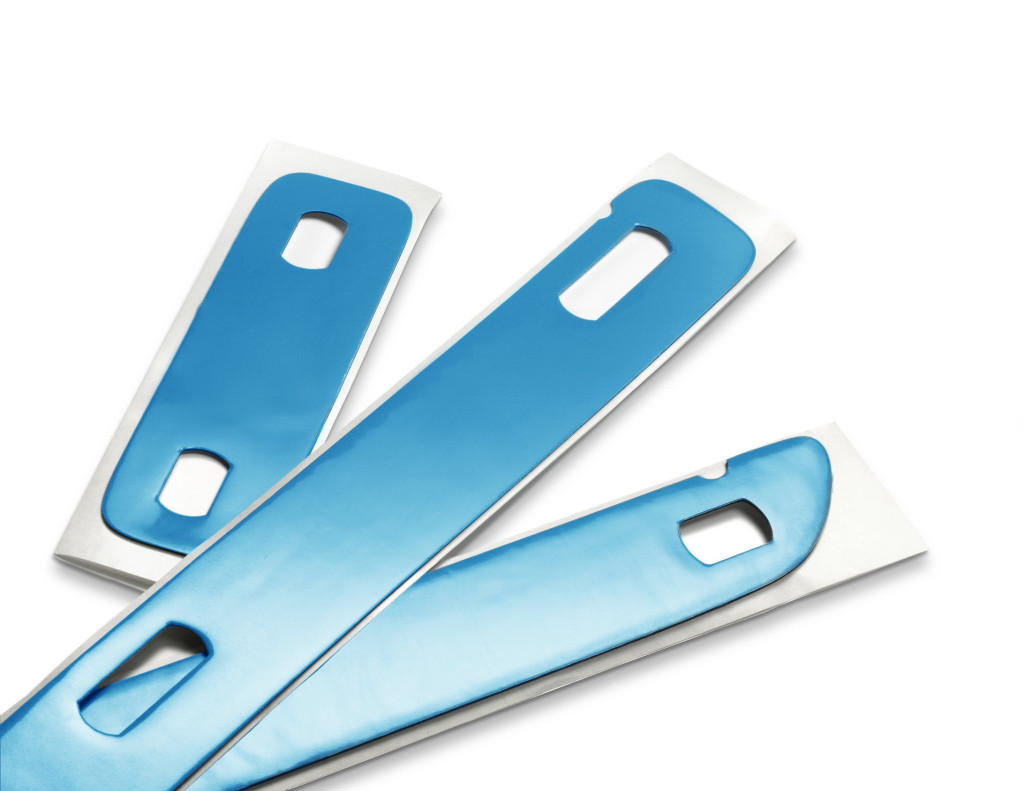
3M Acrylic Plus Tape PT1500 is designed for exactly this. It is a 1.52 mm foamed acrylic tape with a viscoelastic acrylic foam core and a different adhesive on each face: one formulated for automotive paint, including many rigid and flexible clear coats and mar-resistant systems, and the other for the trim part itself, whether metal or primed plastic. 3M recommends an adhesion promoter on plastic parts. Typical uses are body side and roof ditch mouldings, wheel flares, claddings, spoilers, mirror caps and pillar trim.
3M Acrylic Foam Tape PX5011 takes a different route. It carries the same 3M adhesive system on both faces, built to bond medium and low surface energy plastics and a range of automotive clear coats without a separate primer step. That makes it a strong fit for sensor brackets and plastic exterior parts, and it also appears inside the cabin on parts such as pillar garnishes.
Why 3m automotive tape instead of clips, rivets and screws?
Swapping a mechanical fastener for an acrylic foam tape is not just a cosmetic choice. The joint behaves differently, usually for the better:
- It spreads the load. A rivet or screw concentrates stress at one point. A bond line spreads it along the whole joint, which is why taped trim resists fatigue and edge cracking.
- It seals while it bonds. No drilled hole means no water path and no corrosion point in the body panel.
- It damps vibration. The viscoelastic foam core absorbs movement and the different rates at which metal and plastic expand with heat, which helps NVH performance rather than working against it.
- It disappears. No visible fixing, no drilling operation on the line, and a cleaner design for the stylist.
Acrylic foam tapes build strength over time as the adhesive flows into both surfaces. Handling strength is immediate; full strength arrives after around 72 hours at room temperature. Our 3M VHB tape guide covers the mechanism in more detail.
Interior trim and badges on low surface energy plastics
Cabin plastics are a different challenge. Polypropylene, TPO and other low surface energy (LSE) plastics are cheap, light and tough, and almost nothing sticks to them without help. Texture makes it harder still, because a grained surface leaves less of the adhesive in contact with the part.
3M's 300LSE adhesive family was developed for these surfaces. 3M Adhesive Transfer Tape 9472LE carries 0.13 mm of 300LSE adhesive, enough to wet out into a textured plastic, and also bonds powder coatings and lightly oiled metals. Its thinner sibling, 9471LE, suits smoother LSE surfaces where a thinner bond line matters. For badges, nameplates and overlays on metal or high surface energy plastics, 3M's 467MP and 468MP transfer tapes are the long-standing choice.
Cabin materials are often specified against low-emission requirements as well as bond strength. If your part sits inside the cabin, ask us for the emissions data on the grade you are considering before it goes into a validation plan.
Buzz, squeak and rattle: the small parts that decide perceived quality
Buzz, squeak and rattle (BSR) problems dominate how a driver judges build quality: a bracket that hums at motorway speed, a trim panel that creaks over potholes, a harness tapping against a bulkhead. The fix is usually a small die-cut pad placed exactly where two hard parts would otherwise touch.
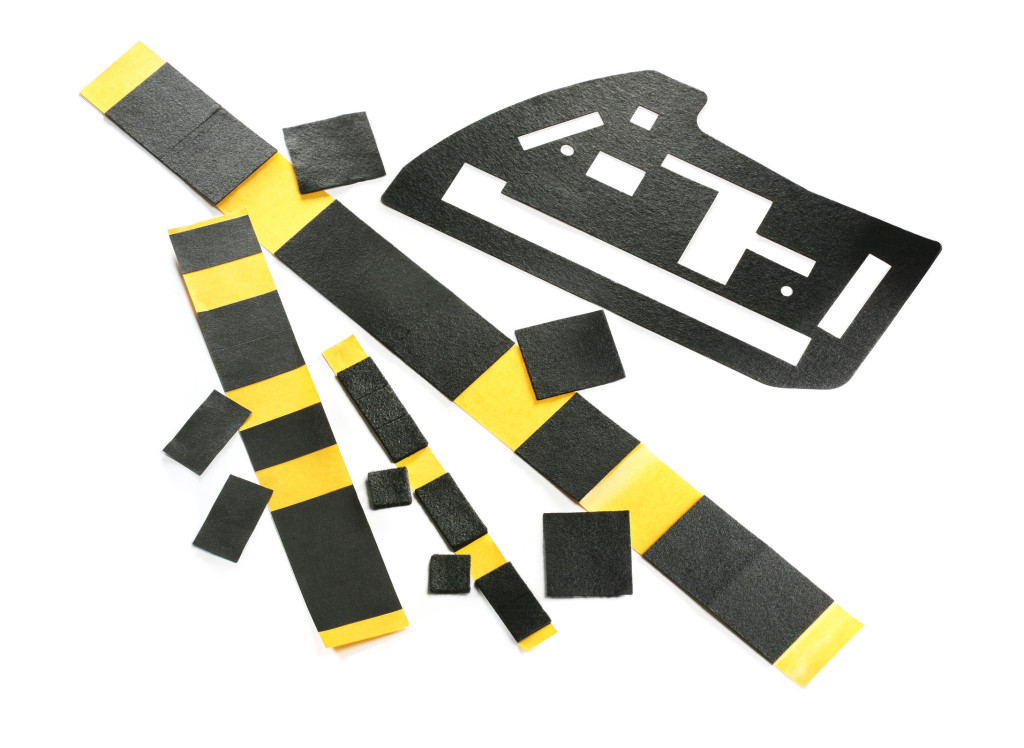
Material follows the job. Thin automotive felts handle light-contact anti-rattle and anti-squeak duty and stand up to abrasion. Poron polyurethane holds its thickness under long-term compression (very low compression set), so a joint stays quiet for the life of the vehicle rather than its first year. PVC/nitrile and closed-cell EPDM foams add sealing where moisture or dust is present. Almost all of them are supplied with a pressure-sensitive adhesive backing, die-cut to the exact footprint, so fitting is peel and place.
Electric vehicles raise the stakes. Without an engine note to mask them, every trim creak and harness tap is suddenly audible, so BSR work moves up the priority list. EV battery systems add their own converted parts on top: enclosure gaskets, compression pads between cells and thermal interface materials, covered in our thermal tape selection guide.
How the parts arrive at your line
Almost nothing in this guide is used straight off the roll. We die-cut pads, strips, gaskets and tape parts to your drawing, with the adhesive protected by an easy-peel liner, and present them the way your line works best: kiss-cut parts on a continuous roll for repeat hand placement, sheeted family layouts where one operator fits several parts at a station, or individual pieces for kitting. On thin films and delicate foams the presentation decides application speed as much as the material does, so we agree liners, tabs and formats with you and trial them before production.
Rotary and flat-bed die cutting handle the geometry, with prototypes cut digitally so nothing needs tooling until the design is settled. Everything runs under our ISO 9001:2015 and IATF 16949:2016 quality systems. PPAP documentation is available on request.
Frequently Asked Questions
3M Automotive Tape FAQs
-
What tape is used for car trim?
Exterior trim is usually bonded with a double-sided acrylic foam tape. 3M Acrylic Plus Tape PT1500 is designed for trim onto painted bodywork, and the 3M PX5000 series suits plastic parts and many clear coats without a separate primer. Interior trim on textured or low surface energy plastics typically uses a 300LSE adhesive transfer tape such as 3M 9472LE.
-
Do 3M automotive tapes need a primer?
It depends on the grade and the surfaces. PT1500 has a paint-side adhesive formulated for automotive clear coats, and 3M recommends an adhesion promoter on plastic trim parts. PX5011 is designed to bond medium and low surface energy plastics and many clear coats without a separate primer step. Always confirm on your actual substrates.
-
What is the difference between 3M PT1500 and PX5011?
PT1500 has a different adhesive on each face, one for automotive paint and one for metal or primed plastic trim, which makes it a specialist for mouldings onto painted bodywork. PX5011 carries the same adhesive on both faces, built for medium and low surface energy plastics and clear coats, so it suits sensor brackets and plastic parts.
-
What is anti-rattle tape?
Anti-rattle tape, or anti-rattle pads, are thin self-adhesive pieces of felt or foam placed where two hard parts could knock together: behind trim clips, under brackets, around harnesses. They absorb vibration and remove the hard contact point, which is one of the cheapest ways to fix a buzz, squeak or rattle.
-
How long does automotive foam tape take to reach full strength?
Acrylic foam tapes give handling strength immediately, but the adhesive keeps flowing into both surfaces after application. Most of the strength arrives within the first day and full strength after around 72 hours at room temperature. Warmth speeds this up and cold slows it down.
-
Can tape really replace rivets and screws on a vehicle?
For trim, badges, mouldings, brackets and many interior parts, yes. Acrylic foam tapes spread the load along the whole bond line, seal the joint and damp vibration, and are used across the industry for exactly these jobs. The grade, joint design and surface preparation must suit the application, and every bond should be validated on the real parts.
-
Do you supply tape for a one-off car repair?
We work with vehicle manufacturers, their Tier 1 and Tier 2 suppliers and other production users, converting tape and foam into parts made to drawing. For a single repair at home, a car accessories retailer will be quicker than we can be.