Guides
What is a 3M Preferred Converter, and Why Does It Matter?

By David Hildrow, Managing Director at RGH Converting
Published 8 October 2026 · Last updated 8 October 2026
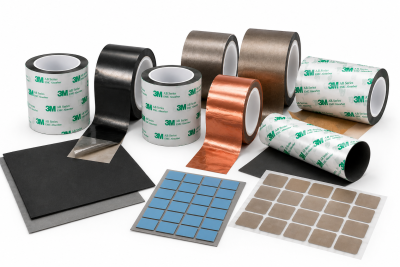
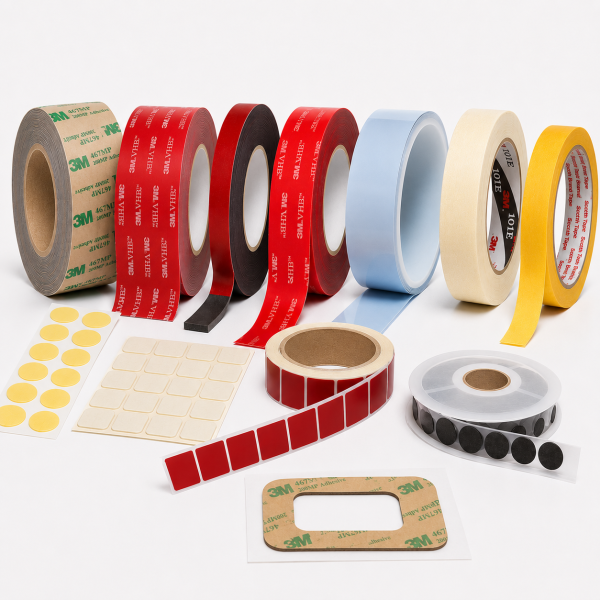
An adhesive tape converter turns materials supplied on the roll into finished components: cutting, slitting, laminating and shaping tapes, foams and films into parts that arrive at your line ready to fit. A 3M Preferred Converter is one that 3M has formally recognised, granting access to the full material range, direct engineering support and a quality standard 3M is willing to attach its name to.
The status is held by a select group of converters worldwide. This guide explains what that means in practice, when buying through a converter beats buying direct, and what to ask any supplier before you commit.
What does a converter actually do?
Manufacturers like 3M make materials in bulk: jumbo rolls or sheets of tape or films on wide webs. Almost nobody uses them in that form. A converter is the step in between, taking the raw material and producing the actual part your assembly needs.
- Slitting: reducing wide rolls to the exact width your process runs. Or slitting whilst winding the rolls into shorter length rolls.
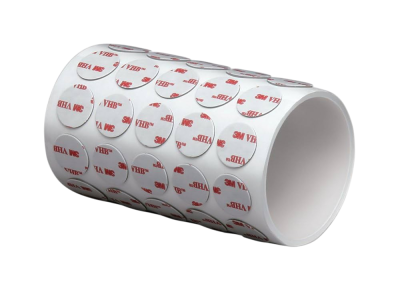
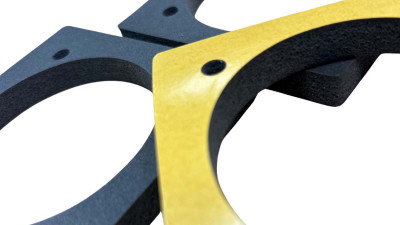
- Rotary and flat-bed die-cutting: cutting parts to your drawing, including kiss-cutting, where the material is cut but the liner is not, so parts peel off a continuous roll.
- Digital knife cutting: tool-free cutting for prototypes and short runs, so you can iterate a design before committing to a die.
- Laminowanie: combining materials into a single part, such as bonding an adhesive to a foam, or building a multi-layer construction.
- Finishing details: extended pull tabs, registration features, family sheets that group several parts together, and the liner and format choices that decide how quickly an operator can place a part.
The output is a component, not a material. That is the distinction that matters when you are deciding how to buy.
Why buy through a converter rather than direct?
Buying direct from a material manufacturer works if you need bulk material and have the capability to process it yourself. For most manufacturers, a converter solves four problems at once.
- Quantity. Material manufacturers usually sell in bulk quantities. A converter buys at that scale and supplies you the volume you actually need, including prototype quantities.
- Labour. Every part cut on your line is time your operators are not assembling product, and waste you are paying to dispose of. Die-cut parts arrive ready to place.
- Material choice. A converter works across product ranges daily. If the grade you asked for is not the best fit, they will say so, and suggest what is.
- Engineering support. The value is usually in the questions asked before anything is cut: what the joint has to survive, what the tolerance stack really is, what format your line handles best.
What Preferred Converter status changes
Any company with a die-cutting press can call itself a converter. The 3M Preferred Converter designation is 3M's own recognition, granted to a select group of converters worldwide, and it changes three things for the buyer.
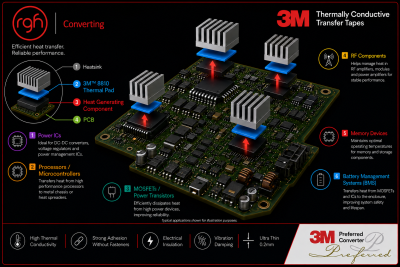
- Access to the full range. Including the specialist products that are not generally distributed: thermally conductive interface tapes, electrically conductive tapes, structural bonding systems and the newer developments as they launch.
- Direct 3M engineering support. On a difficult application, the converter can escalate to 3M's own technical specialists rather than guessing. That is the difference between a suggestion and an informed recommendation.
- A quality standard 3M is prepared to stand behind. The designation is not a purchasing tier. It reflects technical capability and process discipline that 3M has assessed and continues to expect.


How RGH holds that status
We have been converting for four decades from our site in Great Dunmow, Essex, and hold 3M Preferred Converter status alongside the certifications that back it up: ISO 9001:2015, certified by NQA and UKAS, and IATF 16949:2016, the global automotive quality standard that lets us supply OEMs and tier suppliers with the traceability they require.
In 2025 we were awarded the 3M Converter Cup, which recognises performance across the converter network rather than simply membership of it. It is the kind of thing that is easy to put in a footer and harder to earn, so we are quietly pleased about it.
Where the accreditation matters most
In some sectors a converter's approvals are a convenience. In others they decide whether you can use the supplier at all.
- Medical device: material traceability and documented process control are part of your own regulatory file. Searches for a 3M preferred converter usually come from exactly this problem, where the specification names a 3M product and the quality system has to match it.
- Motoryzacja: IATF 16949 runs down the supply chain. A tier supplier without it becomes your risk, and your customer's auditor will find it.
- Rail and transport: fire, smoke and toxicity requirements mean the material specification is fixed and substitutions are not casually made. Access to the approved product range matters more than price.
- Defence and aerospace: traceability again, plus the ability to supply consistently over long programme lifetimes.
If your sector sits in that list, ask about certifications early in the conversation rather than late. It is a short question that saves a long detour.
What to ask any converter before you commit
Whether or not you end up working with us, these are the questions worth asking. A good converter will answer all of them without hesitating.
- 1. What quality certifications do you hold, and can I see the certificates? ISO 9001 is the baseline. If you are in automotive, IATF 16949 is not optional. Ask for the documents rather than the logos.
- 2. Which manufacturers are you approved by, and for what? Approved partner status means access and support. Ask what it actually covers.
- 3. Can you prototype without tooling? If the answer is no, every design iteration costs you a die. Digital cutting should be available for early samples.
- 4. What formats can you supply, and will you trial them with us? Kiss-cut on a roll, sheeted, individually cut, with pull tabs. The right format can halve the time an operator spends placing a part.
- 5. What are your tolerances on this material? Tolerances vary by material and method, and a converter who quotes one blanket figure for everything has not thought about your part.
- 6. Who will I speak to when something goes wrong? The most useful answer involves a named technical person rather than a ticket system.
Frequently Asked Questions
3M Preferred Converter FAQs
-
What is an adhesive tape converter?
An adhesive tape converter takes tape, foam and film supplied in bulk rolls and turns it into finished components: slitting it to width, die-cutting it to shape, laminating materials together and supplying the result in a format your assembly line can use directly.
-
What is a 3M Preferred Converter?
A converter formally recognised by 3M, with access to the full 3M industrial material range, direct engineering support from 3M's technical teams, and a quality standard 3M has assessed. The designation is held by a select group of converters worldwide rather than being open to any distributor.
-
Is a converter the same as a distributor?
No. A distributor sells the material as the manufacturer made it. A converter changes it: cutting, slitting, laminating and shaping it into a component built for your application. Some businesses do both, but the capability you are buying is different.
-
Why use a converter instead of cutting parts in-house?
Cost, consistency and time. Converting equipment is expensive and only pays back at volume. Hand-cut parts vary, and the waste is yours to pay for and dispose of. A converter absorbs the tooling, the scrap and the process development, and you receive repeatable parts with traceable quality records.
-
What is IATF 16949, and do I need my converter to have it?
IATF 16949 is the international quality management standard for automotive production. If you supply the automotive sector, your own customers will expect traceability that runs through your supply chain, so a converter holding it removes a problem rather than creating one. Outside automotive, ISO 9001 is usually sufficient.
-
Can a converter help me choose the right material?
That is one of the main reasons to use one. Describe the application, the environment and the loads rather than naming a product, and a good converter will recommend a material, flag anything that needs a primer or a surface treatment, and supply samples so you can test before committing.
Talk to us about your application
If you have a bonding, sealing, gasketing or thermal problem and are not sure which material solves it, that is the conversation we are best at. Send us the application and our technical team will recommend an approach, supply samples to test, and cut trial parts in the format your line needs.